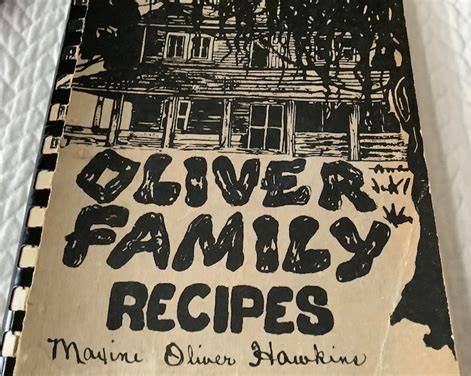
Sometimes an old cookbook turns out to be much more than a collection of recipes.
Oliver Family Recipes, compiled by Maxine Oliver Hawkins and published in 1978, is one of those books.
At first glance it is a wonderful little collection of old Southern family cooking—Chicken Creole, vegetables, casseroles, desserts, Collard Greens and Dumplings, Okra Gumbo and the sort of dishes passed from one kitchen to another long before anybody thought to call them “foodways.”
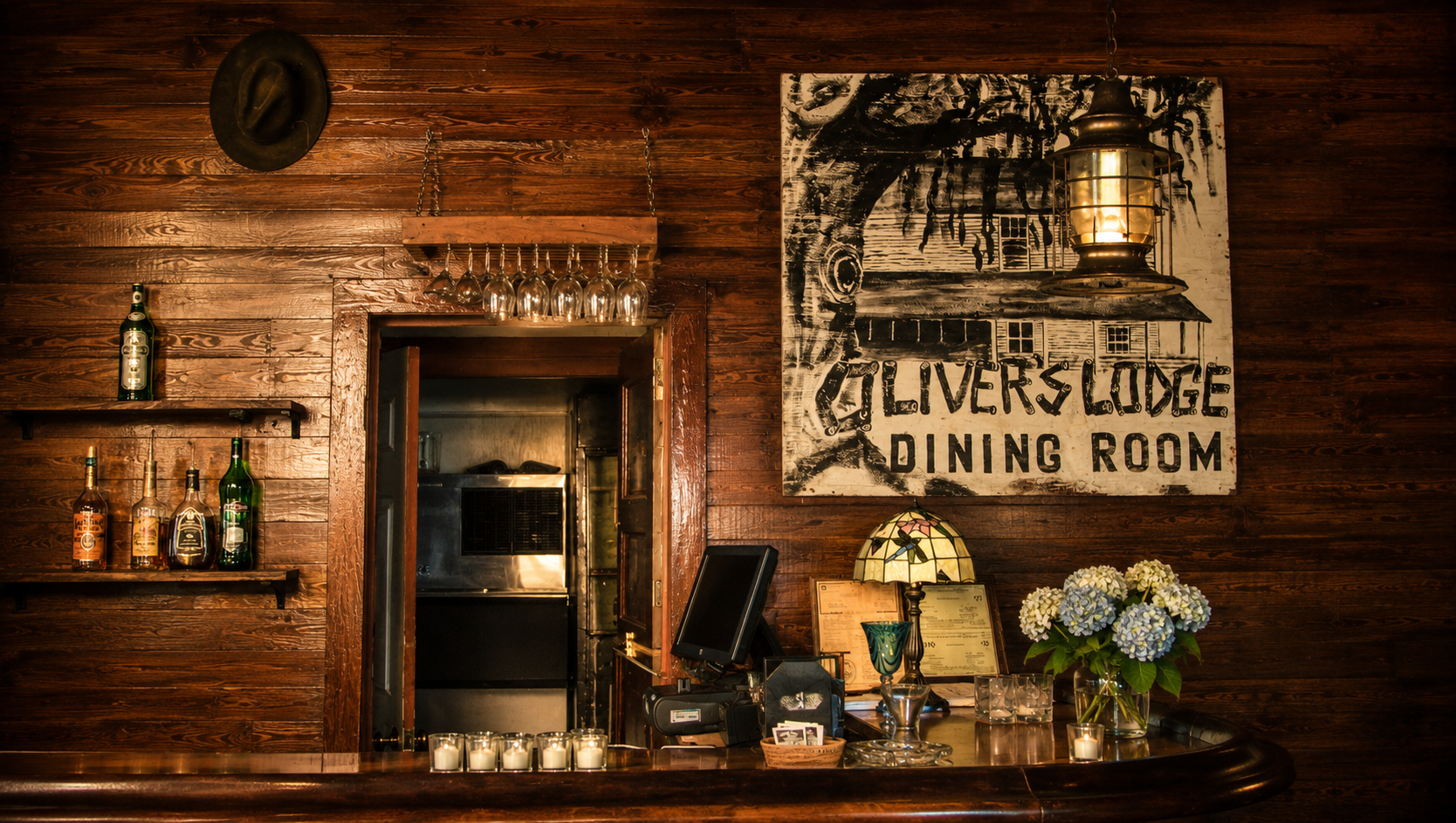
But Maxine Oliver Hawkins wasn’t simply collecting anonymous Southern recipes.
She belonged to the family behind Oliver’s Lodge, one of the historic establishments that helped create Murrells Inlet’s reputation as South Carolina’s “Seafood Capital.”
And when the Oliver family is followed backward through the records, another familiar South Carolina place appears:
- Recipes are at the bottom
Marion.
Capt. Billy Oliver and the Beginning of Oliver’s Lodge
The early Oliver’s Lodge story centers on William Louis “Capt. Bill” or “Captain Billy” Oliver, born in 1863, and his wife Emma Almeria Limehouse Oliver.
The Georgetown County Library’s historical postcard collection specifically records that Oliver’s Lodge opened in 1910 under the management of Captain Billy Oliver.
Before becoming the seafood restaurant remembered by generations of South Carolinians, it was a boardinghouse and lodge.
Capt. Bill was also a working waterman. Local histories describe him as a steamboat captain carrying passengers between Murrells Inlet and Conway on the Waccamaw River, and credit him with helping develop the commercial and charter fishing business that would become so important to Murrells Inlet.
According to surviving local history, Emma Limehouse Oliver acquired the property in 1901. Capt. Bill and Emma began taking in fishermen and other visitors, feeding them family-style meals and turning their home into what became Oliver’s Lodge.
The Georgetown County Library dates the formal beginning of the Lodge to 1910.
Emma Oliver Was Part of the Story Too
Emma was not simply “the captain’s wife.”
She played a major role in the development of the Lodge and also left a remarkable mark on Murrells Inlet’s religious history.
In 1925, the old Oatland Methodist Church near Pawleys Island was dismantled and its materials moved to Murrells Inlet to create what became Belin Memorial Methodist Church.
Belin Memorial’s own history specifically states that:
Mrs. W. L. Oliver was instrumental in having the building moved piece by piece to the present marshfront site.
That Mrs. Oliver was Emma.
So the same woman who helped establish the family hospitality business that became Oliver’s Lodge also helped bring a Methodist congregation and church building to the Inlet.
Emma died in 1939.
She is buried at Belin Memorial Cemetery in Murrells Inlet, as are several generations of the Oliver family.
Capt. Bill lived until 1954 and is also buried at Belin.
And Here Is the Marion Connection
I had always heard or remembered that there was some connection between the Oliver family of Murrells Inlet and Marion, South Carolina.
After tracing the family backward, that connection turns out to be real.
Capt. Bill Oliver was the son of William Stevenson Oliver.
William Stevenson Oliver was one of the children of Samuel Louis Oliver and Ann Rebecca Stevenson Oliver.
And members of that immediate family were living in Marion by at least 1860.
Capt. Bill’s paternal uncle Samuel Lewis Oliver is recorded as living in Marion, Marion County, South Carolina, in the 1860 census.
Another of Capt. Bill’s paternal uncles, Alexander Robert Oliver (1846–1926), also lived in Marion.
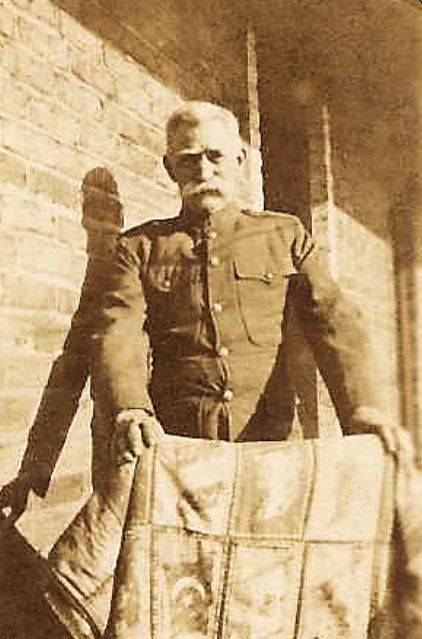
Alexander remained sufficiently connected to Marion that he was ultimately buried at Centenary United Methodist Church Cemetery in Marion.
In other words, the Marion connection isn’t a vague association several generations removed from the family behind Oliver’s Lodge.
These were Capt. Bill Oliver’s father’s brothers—his own uncles.
That puts Marion directly inside the Oliver family network one generation before the establishment of Oliver’s Lodge.
I have not yet found evidence proving that Capt. Bill himself was born in Marion, so I would not make that claim.
But it is now fair to say that the Oliver family from which Capt. Bill descended had documented ties to Marion, South Carolina.
Marion Was Already Feeding Murrells Inlet
There is an even larger historical context that makes this connection particularly interesting.
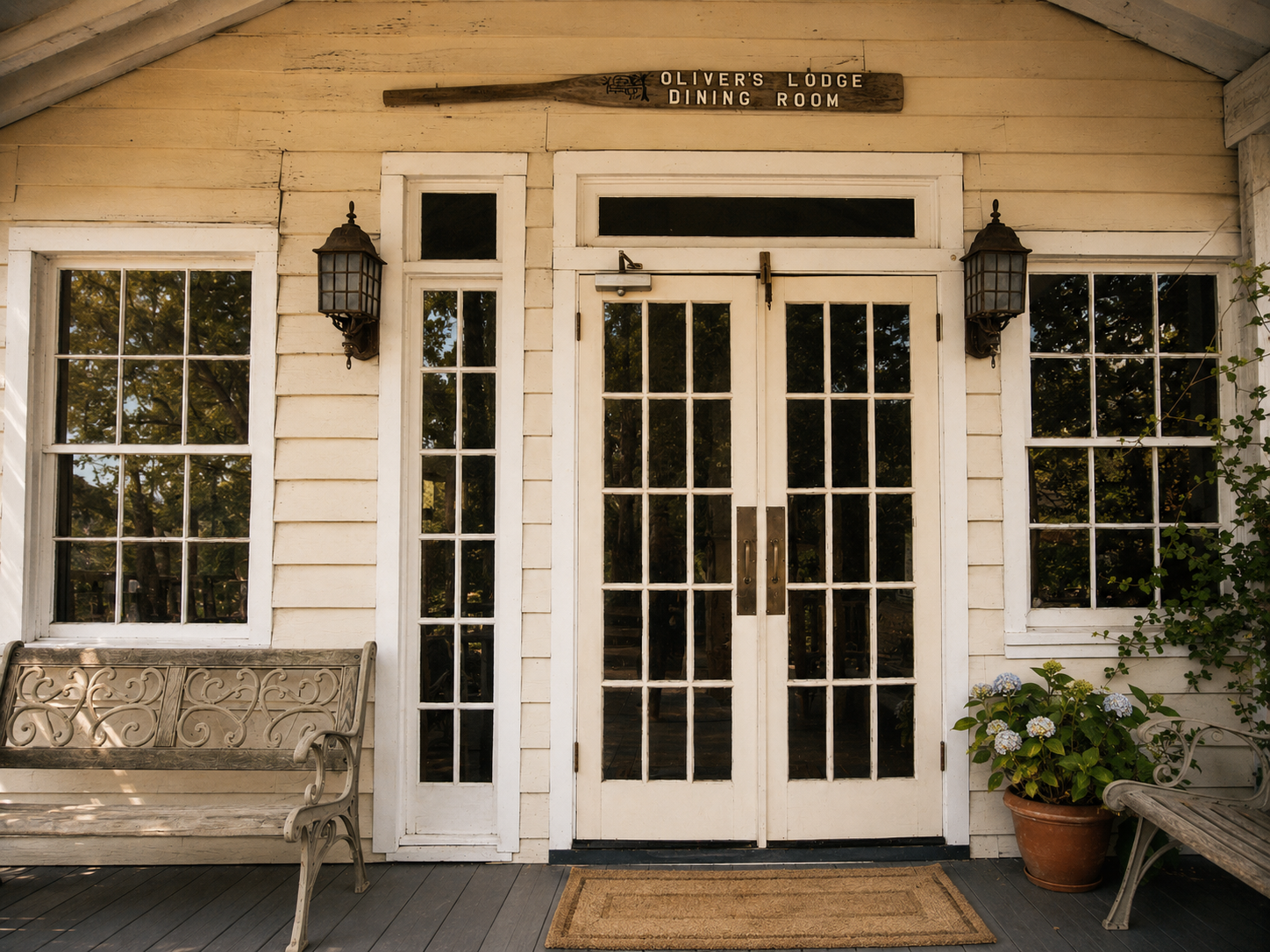
According to the South Carolina Encyclopedia, by the end of the nineteenth century people from inland South Carolina towns—particularly Marion—were beginning to establish a summer colony along the Murrells Inlet creekfront.
At the time, Murrells Inlet was still largely a farming and fishing community.
There wasn’t yet a Seafood Capital lined with restaurants.
Instead, people traveled to the Inlet to eat what local families caught and gathered.
The South Carolina Encyclopedia identifies the Morse, Nance, Vereen, Oliver, Chandler and Lee families among the old Inlet families who fed visitors at oyster roasts and fried shore dinners.
Those gatherings gradually helped create the restaurant culture for which Murrells Inlet later became famous.
So Marion and Murrells Inlet were already connected culturally and economically during exactly the period when the Oliver family was establishing itself there.
People were moving between the inland Pee Dee and the coast, bringing with them family relationships, traditions—and almost certainly food.
The Second Generation: Capt. Mack and Teeny
The Oliver tradition continued through Marmon MacFarlan “Capt. Mack” Oliver, born in 1904.
Capt. Mack was a son of Capt. Bill and Emma Oliver.
He married Florence Jewel Vereen, remembered as “Teeny,” linking two of Murrells Inlet’s old families—the Olivers and Vereens.
Capt. Mack continued the family’s maritime tradition and operated a fishing boat from the Lodge.
The Lodge continued to evolve under Mack and Teeny, moving from the older boardinghouse and family-style operation toward the seafood restaurant remembered by later generations.
Capt. Mack died in 1968 and is buried at Belin Memorial Cemetery.
Florence “Teeny” Vereen Oliver died in 1978.
Maxine Oliver Hawkins
Capt. Mack and Teeny’s daughter was Maxine Oliver, born in Murrells Inlet on June 7, 1930.
She grew up surrounded by a family business in which fishing, cooking, feeding guests and hospitality were everyday life.
She became Maxine Oliver Hawkins and eventually operated Oliver’s Lodge herself.
Her connection to the restaurant is unusually well documented.
In a 1984 South Carolina Court of Appeals decision, she is formally identified as:
“Maxine Oliver Hawkins, d/b/a Oliver’s Lodge.”
The case concerned land immediately adjoining the restaurant.
Maxine remained the owner of Oliver’s Lodge until 1992, according to her obituary.
She died on January 25, 2006, at age 75.
Like her parents and grandparents, Maxine is associated with Belin Memorial Cemetery in Murrells Inlet.
Then There Is This Cookbook
In 1978, Maxine preserved part of that family history in print.
She compiled and published Oliver Family Recipes.
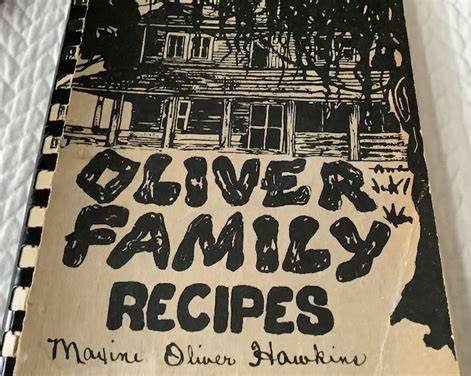
Surviving bibliographic listings identify it as a 1978 first edition, privately or self-published by Maxine Oliver Hawkins. Signed copies still occasionally appear on the antiquarian book market.
That means this cookbook is not merely a generic community cookbook.
It represents recipes preserved by the third generation of a family that had been feeding people at Murrells Inlet since the beginning of the twentieth century.
And some of those recipes are particularly interesting when the Marion connection is considered.
Collard Greens and Dumplings
One recipe immediately caught my attention:
Collard Greens and Dumplings.
My own family, with deep Marion-area roots, makes collard greens with dumplings.
For most of my life, when I’ve mentioned the dish to people outside that circle, many have never heard of it.
That does not prove that my family and the Oliver family were related or that one recipe came directly from the other.
But now that we know members of Capt. Bill Oliver’s immediate family were living in Marion—and that Marion residents were among the people moving between the Pee Dee and Murrells Inlet in the late nineteenth century—the appearance of the same unusual food tradition becomes especially intriguing.
Recipes don’t respect county lines.
They travel with mothers, grandmothers, marriages, cousins, church dinners, hired cooks, neighbors and families moving from one community to another.
A recipe can sometimes preserve geography long after the people who carried it have been forgotten.
Collard Greens and Dumplings may be one of those recipes.
Recipes are at the bottom
At the very least, its presence in both a Marion family tradition and the Oliver collection suggests that this is a dish worth studying as part of the older food culture shared between the Pee Dee and the Waccamaw coast.
Coming Full Circle: From Marion to Murrells Inlet — and Back Again
There is one final chapter to the story of Oliver’s Lodge, and remarkably, it leads back to Marion.
When the historic Oliver’s Lodge was carefully deconstructed in 2026, Conway Architectural Salvage and Heritage Project recovered materials from the building so that portions of the old landmark could survive even though the structure itself could not.
Among those materials was something particularly special: old-growth Longleaf Heart Pine flooring.
Nearly 3,000 square feet of that wood has now found a new home at another historic South Carolina landmark—the Hotel Marion on Main Street in Marion, South Carolina, which is undergoing an extensive restoration and is being returned to use as a boutique hotel.
Hotel Marion has preserved as much of its original hardwood flooring as possible. In areas where the original flooring could not be saved, the restoration team incorporated the Longleaf Heart Pine recovered from Oliver’s Lodge. The reclaimed flooring was installed, sanded and sealed, allowing wood that spent generations in Murrells Inlet to begin another chapter in Marion.
And the flooring isn’t the only piece of Oliver’s Lodge making the journey.
Bricks salvaged from the chimneys of Oliver’s Lodge are also being incorporated into Hotel Marion, where they are planned for use in the hotel’s courtyard.
The connection is especially meaningful because the relationship between the Oliver family and Marion is not merely symbolic. Genealogical records document that Capt. William Louis “Billy” Oliver belonged to an Oliver family with immediate ties to Marion. His father William Stevenson Oliver’s brothers—Capt. Billy’s paternal uncles Samuel Lewis Oliver and Alexander Robert Oliver—lived in Marion, with Alexander ultimately buried at Centenary United Methodist Church Cemetery there.
During the deconstruction of Oliver’s Lodge, another remarkable piece of family history literally emerged from the building itself.
While dismantling the Inlet-facing roof, Conway Architectural Salvage discovered what it described as the building’s “Maker’s Mark” on an original board. Written upon the timber was:
“W. L. Oliver”
The name belonged to William Louis Oliver—Captain Billy Oliver, the man associated with the beginnings of Oliver’s Lodge.
Additional markings appear beneath his name. Conway Salvage believes they may represent the first letters of the names of three of Captain Billy’s sons: Mac, Frank and Robert. Because that interpretation comes from the preservation team rather than a definitive documentary identification, it is best regarded as a fascinating possibility rather than established fact.
More than a century after the Oliver family helped establish one of Murrells Inlet’s best-known institutions, parts of that institution are now returning inland.
The old-growth pine that once supported generations of footsteps at Oliver’s Lodge is becoming flooring at Hotel Marion. Bricks from the Lodge’s chimneys will become part of a new courtyard. And hidden within the old structure itself was a board still bearing Captain Billy Oliver’s name.
It creates an extraordinary historical circle:
Marion → Murrells Inlet → Oliver’s Lodge → Marion.
Buildings can disappear while pieces of their stories survive.
In this case, they survive not only in photographs, family records and a little 1978 cookbook called Oliver Family Recipes, but in the very wood and brick of Oliver’s Lodge—materials now beginning a new life back in Marion, where part of the Oliver family’s story had roots generations ago.
More Than a Restaurant
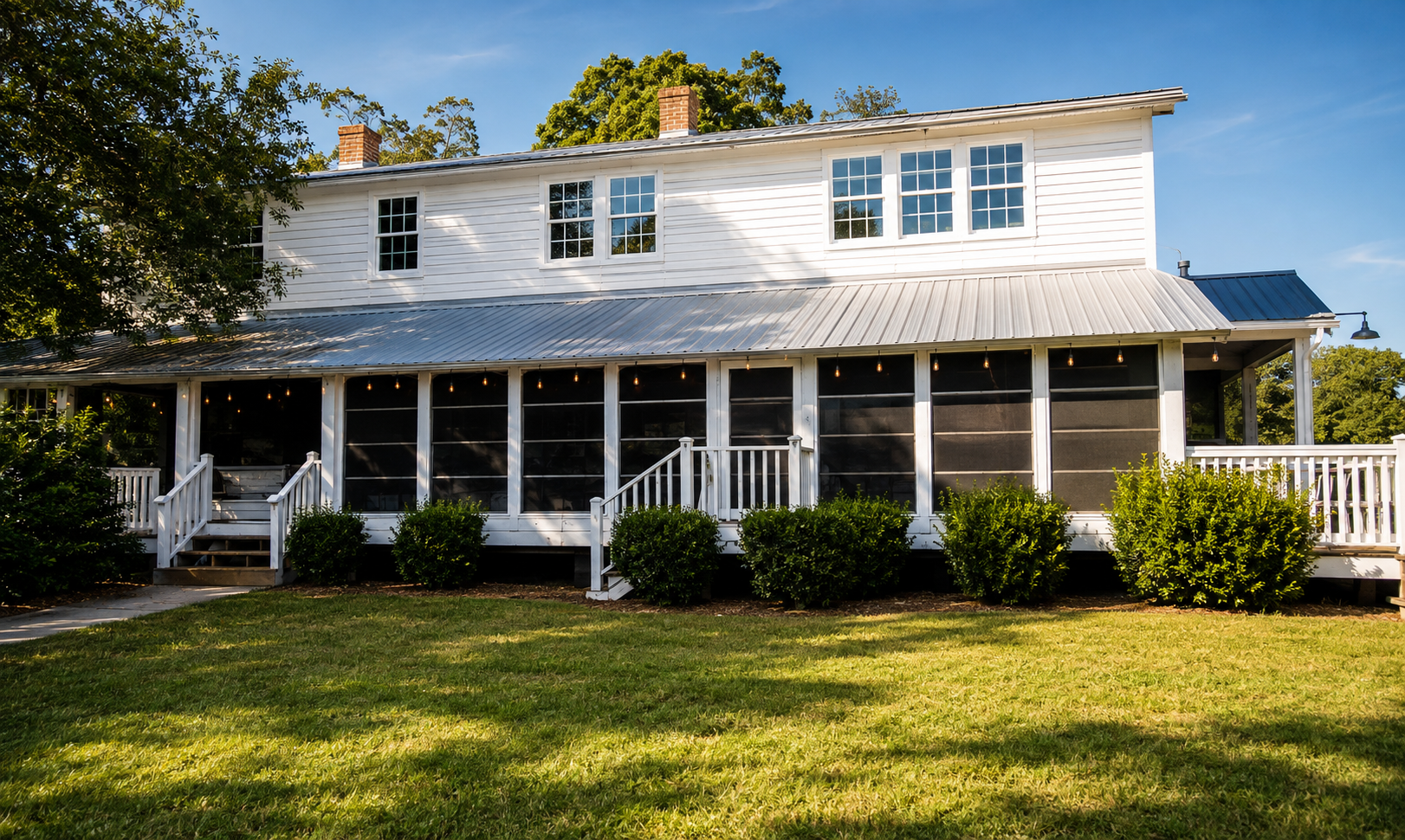
Oliver’s Lodge ultimately became one of Murrells Inlet’s landmark seafood restaurants.
But the family history behind it tells a larger story.
It begins with an Oliver family whose members can be documented in Marion during the nineteenth century.
It continues with Capt. Bill and Emma Oliver at Murrells Inlet, opening their home to fishermen and visitors.
Emma helped establish both Oliver’s Lodge and, in a very different way, Belin Memorial Church.
Their son Capt. Mack carried on the family’s maritime and restaurant traditions.
Their granddaughter Maxine inherited the Lodge and preserved the family’s recipes.
And in 1978 she placed those recipes into a little comb-bound cookbook.
Nearly fifty years later, that book preserves something even the old restaurant building cannot:
the taste of the Oliver family’s Murrells Inlet.
For people interested in South Carolina history, the Pee Dee, Murrells Inlet or old regional cooking, Oliver Family Recipes is more than a cookbook.
It is a small family archive.
And tucked between its pages may still be traces of the road that once ran culturally from Marion to Murrells Inlet.

.
.
